

Health
The problem with the school smartphone debate
Study finds most districts already regulate devices. Is the real issue enforcement?
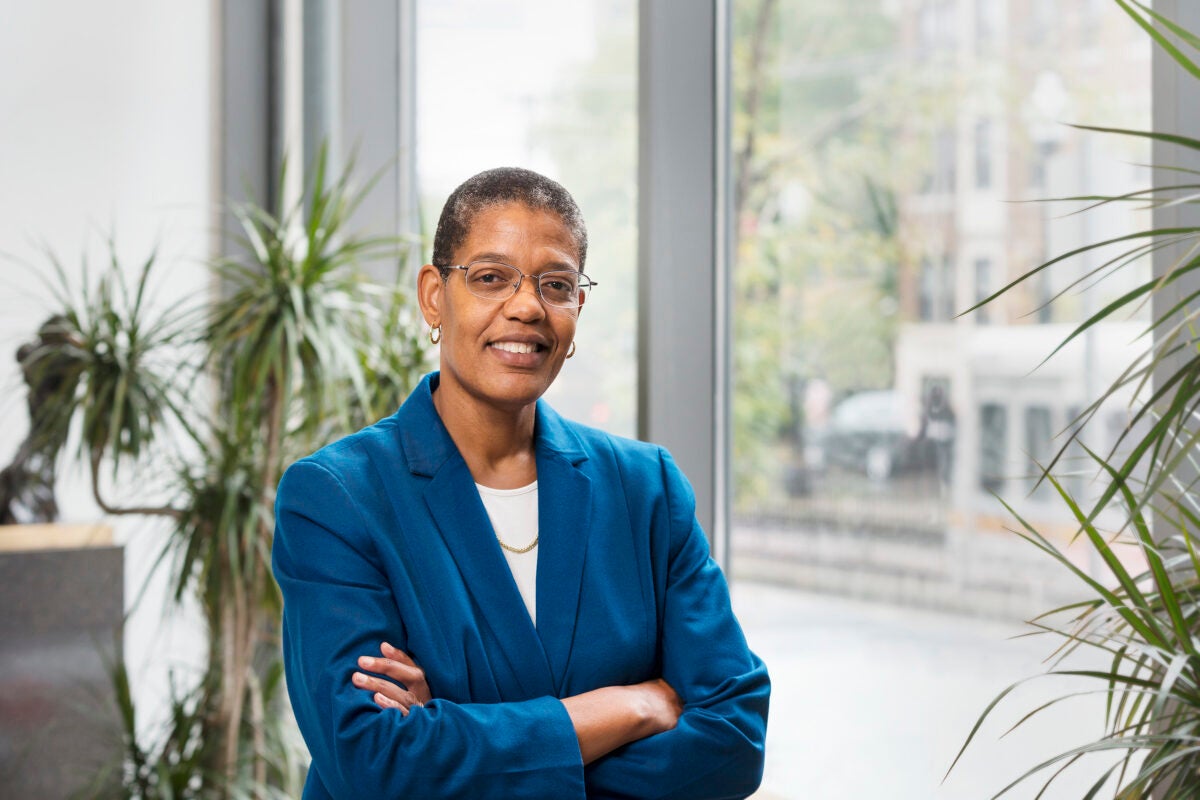
Hao Yu.
File photo by Stephanie Mitchell/Harvard Staff Photographer
Amid concern about student screen time and mental health, new research indicates that most U.S. public schools already have policies regulating the use of smartphones in class.
Hao Yu, associate professor of population medicine at Harvard Medical School and at the Harvard Pilgrim Health Care Institute, said his finding raises the question of whether the policies are being enforced.
“The most surprising thing may be that school-level cellphone policy was so prevalent,” said Yu. “Almost every public school we surveyed indicated that they have a cellphone policy.”
The research, conducted in October 2024 and published in a recent JAMA Health Forum, surveyed public school principals about cellphone policies effective during the 2024-2025 school year. It categorized policies according to strictness, from outright bans to permitting students to bring a phone but not use it when school is in session. Of intermediate strictness are policies that allow students to bring smartphones to school but only use them outside of class. The least strict categories contain schools that allow phone use in the classroom at the teacher’s discretion and include schools that have no cellphone policy at all.
97%
Of public schools have some sort of cellphone policy, according to study
The survey found that 96.68 percent of public schools have some sort of cellphone policy. Elementary schools are the most restrictive, with 6.79 percent having a “no phones at school” policy and another 81.62 percent mandating “no phone use while school is in session.” Middle schools are a bit less strict, with about 75 percent allowing phones but banning their use while school is in session and about 15 percent allowing phones for use only outside of class time. High schools are the least restrictive, with just about 25 percent banning use when school is in session, and about half allowing use at school but outside of class. Nearly a quarter of high school policies allow use during class with permission of the teacher.
The survey was published in October and conducted with colleagues from Harvard, Brigham and Women’s Hospital, Brown University, and RAND.
Yu said the distribution of school cellphone policies with different levels of restrictiveness makes some sense, as the strictest policies are for the youngest students and the policies become more liberal as the students grow older and gain autonomy. Yu pointed out, however, that the loosest policies are at the high school level, which also has higher rates of depression. He also said this survey did not probe whether there was an association between mental health and looser policies.
Yu acknowledged that the survey raises questions to be explored in future work. Among them are differences in smartphone policies by school characteristics, such as whether policies at public charter schools or private schools, for example, differ from those at traditional public schools; what associations exist between the policies and student mental health; and how schools enforce cellphone policies. The question about policy enforcement is particularly important to examine given the increasing number of states that have enacted statewide bans of cellphone use in schools.
“Even if a state bans cellphones at schools, it’s really up to school principals and teachers to enforce the law,” Yu said. “It’s a gap in the literature as to how exactly those key players are enforcing.”
Ultimately, Yu said, society has to seek a balance on the issue because today’s students are going to work all their lives in environments with smartphones and other screens, as well as increasingly sophisticated AI. Merely labeling these devices “evil,” he said, ultimately won’t be helpful.
“It’s a challenge for teachers because nowadays, for this younger generation, cellphones or AIs are just part of their life,” Yu said. “How you help them incorporate these tools into their academic life is really challenging.”