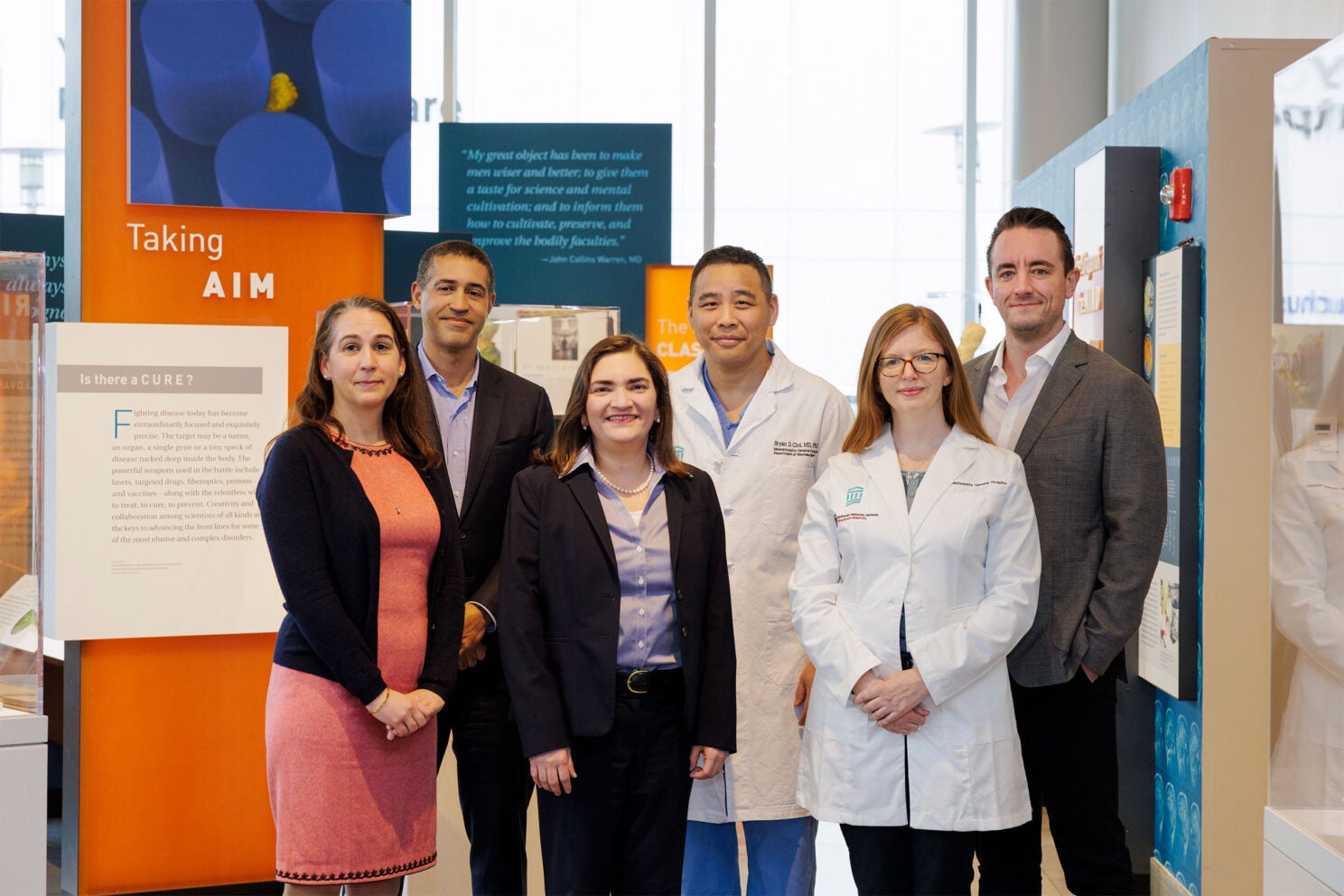


Wei Zhang.
Veasey Conway/Harvard Staff Photographer
Health
Facing life-or-death call on who gets liver transplants
Surgeons, medical professionals apply risk calculus that gets even more complex for patients with drinking problems
A series exploring how risk shapes our decisions.
Surgeons face a tough question when it comes to liver transplants. Donor organs are in short supply, and the decision of who will receive one is a life-or-death call. It’s one that can be made even more complicated if a patient has suffered from alcohol-use disorder.
“As doctors, we always want to save lives — especially in this setting and in those patients who are very young,” said Wei Zhang, a transplant hepatologist at Mass General Hospital. “But we also have to balance that the organs are very sparse. The question is: If a patient undergoes a liver transplantation but dies within the first five years of liver transplantation, was it worth it?”
The risk calculus for physicians like Zhang and other healthcare professionals is thorny and complex and involves evaluations of a patient’s medical condition, support network, and personal history and knowledge of alcohol-use disorder, which is associated with higher incidence of liver disease.
The stakes are high. Patients with decompensated liver disease, or what commonly has been referred to as end-stage liver disease, have drastically shortened life expectancies without transplantation. In one study, patients in this stage who developed complications lived only two years after diagnosis.
But a transplant is not always a final solution. As many as 20 percent of all patients with a history of alcohol use disorder will relapse after surgery.
“If we know a patient is going to relapse after liver transplant, the evidence is that the chance of them developing recurrent cirrhosis in three years is about 50 percent and the chance of dying from the recurrent liver disease in five years is about 50 percent,” Zhang said. “We do a lot of interventions to prevent them from going back to drinking and improve their quality of life.”
In addition to his work as a hepatologist, and as an assistant professor of medicine at Harvard Medical School, Zhang is also the director of MGH’s Alcohol-Associated Liver Disease Clinic where he has helped guide unique post-transplant programs aimed at protecting the long-term health of patients and their new organs.
“We have to isolate ourselves from the decision that we make, because it’s not my decision. It’s actually a consensus from the entire committee.”
“As doctors, we have to be realistic,” he said. “We have to isolate ourselves from the decision that we make, because it’s not my decision. It’s actually a consensus from the entire committee. I do sometimes question myself … if I pushed harder, could I give the patient a chance of getting a liver transplantation? But at the end of the day, it’s a team effort.”
And, Zhang added, he finds solace in knowing that if one patient isn’t a good fit for transplantation, the organ will help save another life.
“I also understand that if a patient receives an organ, it means that another patient is not able to receive the organ,” he said. “So when I think of that, I find a little bit of comfort.”
In the last decade, the field of transplant hepatology has changed drastically. In the not-so-distant past, all patients coming into the hospital with a failing liver and any history of alcohol abuse were denied life-saving surgery.
“When I was doing my residency, most of those patients did not have any chance of being evaluated for liver transplantation,” Zhang said.
Now, he added, there are still quite a few hurdles that patients need to clear to be approved for transplantation. But there’s hope — especially for those with strong support at home.
“If a patient has no prior knowledge of their drinking causing the liver disease, has no known liver disease, and they come to the hospital actively drinking, there are two different criteria that we want those patients to meet,” Zhang said. “One is called medical criteria. The other one is called psychosocial criteria.”
Zhang said the first step in assessing a patient as a candidate for a liver transplant is to rule out any underlying health conditions such as heart and lung issues that may cause issues during surgery.
The second is to evaluate their likelihood of making behavior changes to protect their health. This step, Zhang said, usually takes a multidisciplinary team, including a social worker, an addiction specialist, and a hepatologist, to make a consensus.
“Some of the factors that we look at is if a patient has insights, meaning, does the patient think that the liver disease is caused by alcohol?”
“Some of the factors that we look at is if a patient has insights, meaning, does the patient think that the liver disease is caused by alcohol?” Zhang said. “There are patients who, for various reasons — one of them is probably stigma — don’t acknowledge that the liver disease is caused by alcohol. The risk is that if they get a liver transplantation, and don’t think they need treatments, they may relapse.”
The other piece of psychosocial criteria, Zhang said, is social support. This includes having strong family ties, stable housing, and the overall ability to seek support after surgery.
“Then those patients would be considered as good candidates with acceptable risk for post-liver-transplant relapse, and we can move on for a liver transplant evaluation,” Zhang said.
Binge drinking and high-risk drinking is on the rise. According to Zhang, younger patients and more female patients have been increasingly suffering from severe consequences like liver failure and cirrhosis. The youngest patient with cirrhosis he’s seen, Zhang said, was 22.
Such concerning trends suggest physicians will face the risks of burnout over having to make more high-stakes decisions. Zhang says for him, all of that just comes with the territory.
“It’s not an easy job, but I do love it,” he said. “The most important piece of this is that if I save lives, I’m happy.”